Special Needs Children
Published05/12/2026
4 min read
My child Doesn't Talk. But She Communicates
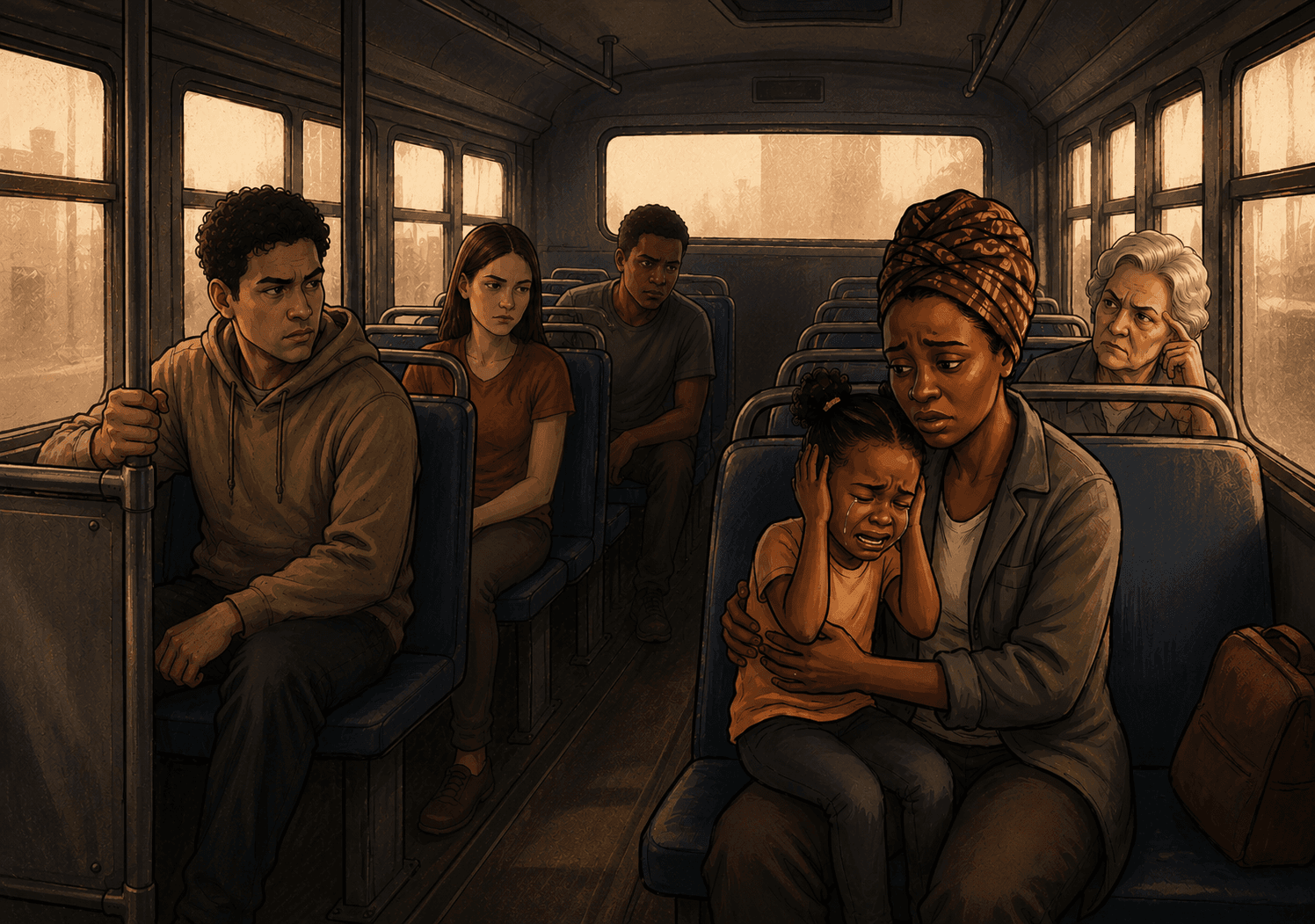
When we were coming from a medical appointment, my daughter Nysha and I were rushing to catch the public bus home. Nysha is a non-speaking autistic five-year-old. We were exhausted from a long day of early morning travel and hospital appointments, and we were ready to reach home. At the public car park, we found a bus departing in fifteen minutes with two seats left near the driver. We grabbed one and sat down. The environment was noisy, people were going in and out, the sun was burning hot, and the journey ahead was about two hours. And then the mood shifted. Nysha began to melt down …
When the Whole World Judges You
Everyone stared at me, sitting with a grown-up girl on my lap who was still crying as if she was terrified, alone in the dark, without being able to say what was going on or what she needed. The driver turned and said: “You there, and your little one, get out. You can wait for the next bus and look for a back seat and stop disturbing everyone.”
I looked into the eyes of the people around us: mothers, fathers, young and old, hoping that someone from those back seats would offer to swap so we could manage to get home too. No one moved. They all kept theirs. They started talking quietly among themselves: “Time is almost up, get out.” Others said things like “Look at that mother, she can’t even calm her daughter for a second”, “Parents today don’t know how to discipline their children”, “Just a few good slaps and she will keep quiet”, “Madam, take control or let the bus go. You can’t disturb all of us for your daughter.” No pity at all.
My heart was heavy. I couldn’t find the words to explain ourselves to everyone on that bus. I tried to speak to the driver, to tell him we really needed to get home, but he was not willing to listen. I held Nysha, stood up, and got out. A waiting passenger grabbed our seat before the doors even closed. The bus left. I took a breath, walked to the bus office, and got us tickets for the next departure: forty minutes away.
The Language I Learned
Over time, I had learned to understand her world. Her way of communicating can be hard for strangers to read, but even exhausted that afternoon, I knew exactly what was happening. She was overwhelmed by the sensory environment. She needed understanding and comfort, not correction.
Forty minutes was just enough time. We went to the restroom, watched the tap water flowing, listened to music, shared some snacks, and held each other close. She clutched her cotton towel, the one she loves to touch, one of her sensory tools. Slowly, she began to settle. She started smiling and running around.
Time to go home. We boarded the bus and took a back seat, as the first driver had suggested. No more tantrums, no public judgments. No one knew what we had been through on the first bus, and Nysha was now joyful and cooperative. She sang some of her favourite songs and fell asleep on my lap. The journey went smoothly. We reached home not quickly, but safely. And when we finally arrived, everything was right: her toys, her siblings, the familiar faces, every corner of the house she knows by heart. A place where she is treated exactly as she is. Where love is full.
Can the surrounding community increase acceptance and understanding?
Nysha’s siblings and classmates want her to play “normally.” The whole community expects her to respond on time. But she does not. Not because she is not normal, but because she is different. At school, her classmates call out: “Nysha, say hello!” “Nysha, come play!” “Why doesn’t she answer?” At home, relatives suggest she is stubborn, or that she needs to learn faster, or that she must behave differently. With her curious eyes that take in everything and a posture that radiates energy, Nysha looks like any other child. And so everywhere she goes, people wait for her to respond on time, to sit still, to play the right way, and to speak words that do not come.
Every time Nysha does not speak, she is not ignoring anyone or refusing. She is simply communicating differently. Over time, the people in her life have learned that patience, observation, openness to alternative communication, and kindness in place of judgment are not just nice to have. They are essential.
When you raise a child with special needs, advocacy becomes a way of life. You constantly find yourself educating people how to interact with your child, helping them to interpret her language, communicating the kind of environment that works best for her. When I look back I deeply appreciate all the growth I have achieved from this journey; I learned to be more patient, more understanding and I learned to communicate better.
After all, Nysha communicates. She remains exactly who she is: sensitive, energetic, brilliant, different, and deeply loving, even without spoken language. Not broken. Just different. Because raising a child with special needs was never about forcing the child to fit into the world. It was about slowing down enough to understand them. Nysha does not speak. But she communicates. And she always has. Because communication is more than speech.